Thursday, February 5th, 2026 03:41 pm

Posted by Teresia Gray

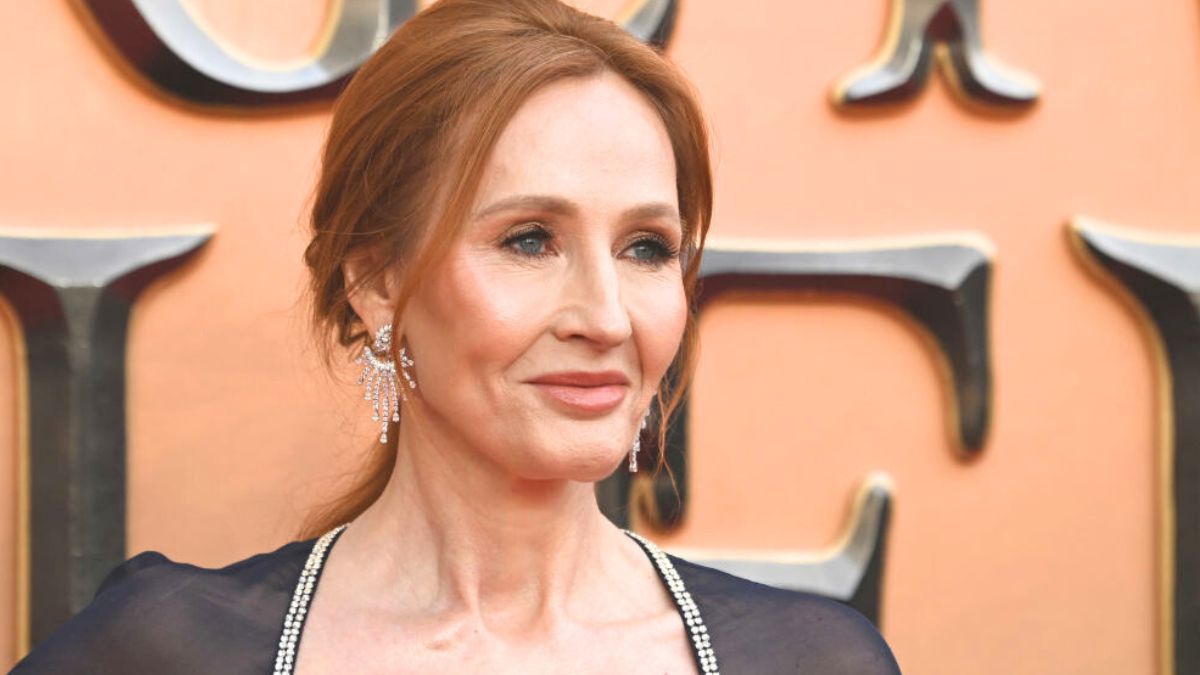
LONDON, ENGLAND - MARCH 29: J.K. Rowling arrives at the "Fantastic Beasts: The Secret of Dumbledore" world premiere at The Royal Festival Hall on March 29, 2022 in London, England. (Photo by Stuart C. Wilson/Getty Images)

JK Rowling is scurrying after her name popped up multiple times in The Epstein Files. The US Department of Justice released another batch of the highly anticipated documents related to the sex trafficker.

All over social media the Epstein Files are trending, and the Harry Potter author finds herself at the center of some of these conversations. Epstein argued that he was invited to an event for Harry Potter and the Cursed Child on Broadway. When he was turned away at the door in April of 2018, the party organizers made sure to not let him in. Rowling quickly hopped on X to deny the allegations from fans who have noted her championing other causes to “protect children,” but notice that the most famous pedophile in history somehow thought he had an invite to her event.

Thursday, February 5th, 2026 03:00 pm

Posted by Ljeonida Mulabazi

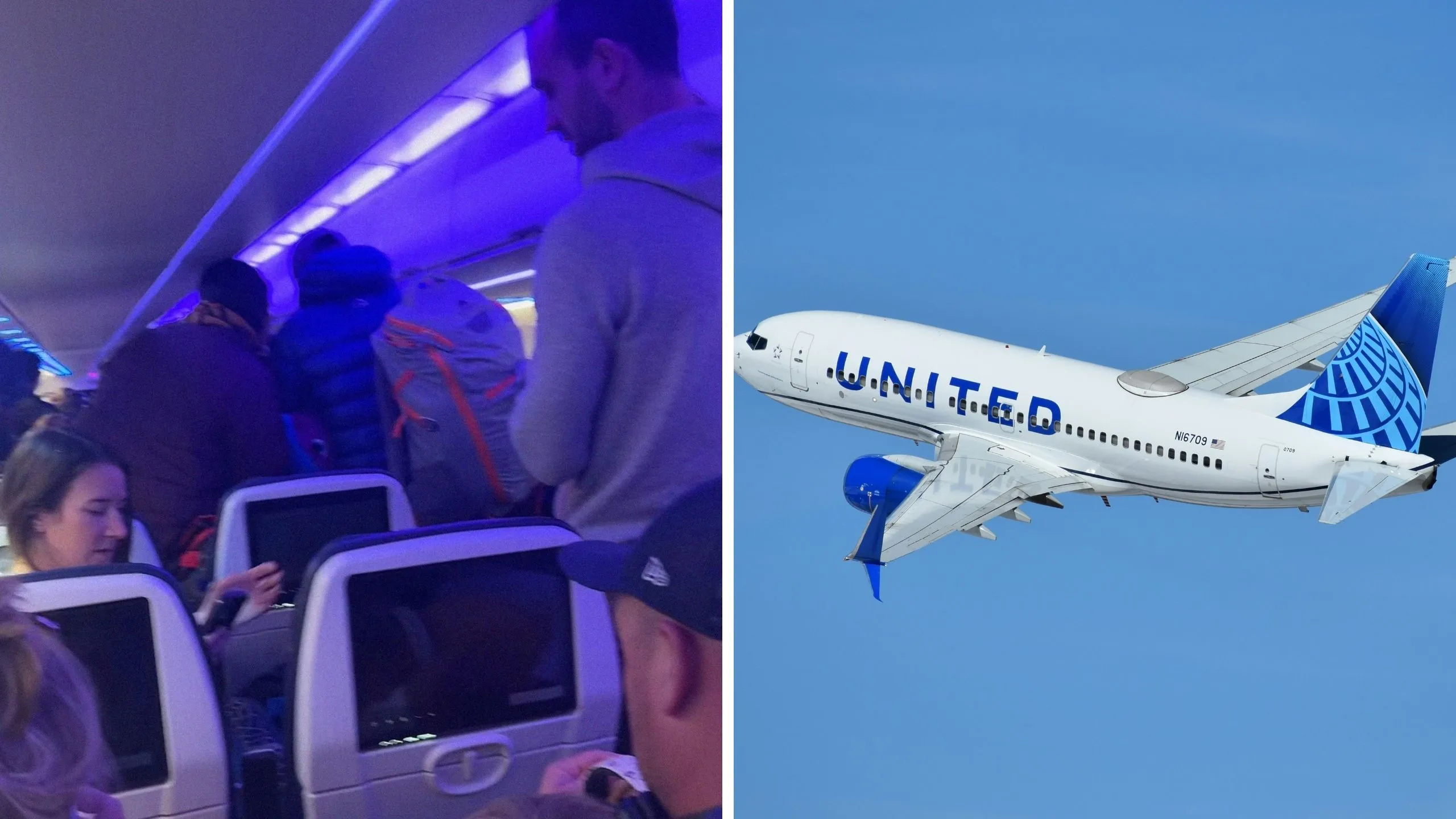
plane full of families (l) american airlines aircraft (r)

The U.S. has been experiencing extreme winter weather, with icy conditions recently spreading even across southern states.

While Chicago is no stranger to harsh, cold winters, some passengers are reporting unusual disruptions to air travel. Recently, one TikTok creator filmed what that looked like from inside the plane. 

Thursday, February 5th, 2026 02:59 pm

Books on pre-order:

  1. Platform Decay (Murderbot 8) by Martha Wells (5 May)
  2. Radiant Star (Imperial Radch) by Ann Leckie (12 May)
  3. Unrivaled (Game Changers 7) by Rachel Reid (29 Sep)

Books acquired in January:

  • and read:
    1. The Shots You Take by Rachel Reid
  • and previously read:
    1. Time to Shine by Rachel Reid

Books acquired previously and read in January:

  1. Claiming the Tower (Council Mysteries 1) by Celia Lake [Dec 2025]
  2. Alchemical Reactions by Celia Lake [Dec 2025]

Borrowed books read in January:

  1. The Serpent's Shadow (Kane Chronicles 3) by Rick Riordan [3]
  2. Demigods & Magicians by Rick Riordan [3]
  3. The Sword of Summer (Magnus Chase 1) by Rick Riordan [3]
  4. The Hammer of Thor (Magnus Chase 2) by Rick Riordan [3]
  5. The Ship of the Dead (Magnus Chase 3) by Rick Riordan [3]
  6. 9 from the Nine Worlds by Rick Riordan [3]
  7. The Let Them Theory by Mel Robbins

[1] Pre-order
[2] Audiobook
[3] Physical book
[4] Crowdfunding
[5] Goodbye read
[6] Cambridgeshire Reads/Listens
[7] FaRoFeb / FaRoCation / Bookmas / HRBC
[8] Prime Reading / Kindle Unlimited

Thursday, February 5th, 2026 06:51 am
Here's yet another characterization of sf cons as unwelcoming and elitist. I find that a very strange charge. In my youth I was stepped on by all sorts of elites, but I never had any trouble finding sf cons welcoming and joyous.

But I know why this is. It's because I didn't go to sf cons with a chip on my shoulder. I had figured out that literary sf cons are about written sf literature. If you go to a focused special-interest con, you have to focus on what interest you have in that, and put other interests in abeyance for the weekend. I once went to a festival celebrating Peter Jackson's Tolkien movies. I'm famously excoriating on those, but I shut up about that for the weekend and accepted the celebration of what's good about them (and there are good things about them, just not anything having to do with Tolkien). Last month I went to a Clark Ashton Smith conference. I'd never paid more attention to Clark Ashton Smith than the length of time it took to read one or another short story by him, but for that weekend I focused on Clark Ashton Smith - and learned a lot.

And the reason these small specialty conferences are hostile to other interests is because they feel beleaguered. They're a community and they have an interest. There's a lot more comics fans than there are literary sf fans, as the size of comics cons will reveal, and they've got plenty of conventions of their own. Same with movies. If they come in to the small specialty cons, they'll drown out what the con is there for. Decades ago there was a joke in the Mythopoeic Society that Star Wars was the black hole of conversation; that once it came up, it took over the discussion.

I don't expect these cons to change their focus for me. I don't march into a literary sf con and demand to be taken as a comics fan, as the poster did. They're a community; you can join that community if you have any interest in its subject. (Some of the Clark Ashton Smith attendees had barely begun reading his work, and they weren't denigrated by the hoary old specialists, because they were showing interest; they weren't demanding the con be about something else.) Blend into the environment you're in, if you have any interest in it at all. There'll be a chance for a different environment next weekend.

PS: Kayla Allen corrected a small factual error in the post.
Thursday, February 5th, 2026 08:52 am


Federal Ranger Cracka Buckshore's efforts to keep irate parents from lynching handsome Fodo Bathin are complicated when Cracka, Fodo, and everyone else on the planet are kidnapped and taken to an artificial universe.

Golden Sunlands by Christopher Rowley
Thursday, February 5th, 2026 01:00 pm

Posted by Braden Bjella

woman shares walmart pick-up issue (l) walmart storefront (r)

Ever since the pandemic, curbside pickup has become a popular option for shoppers across the country.

The process of ordering for curbside pickup is simple. One places an order, receives a confirmation, and then is told when they can arrive outside the store to get their purchase, which is generally delivered to their car by an employee. 

Thursday, February 5th, 2026 08:38 am
Last time I posted one of these reading lists, [personal profile] asakiyume noted that I’d already read, like, half the books, and I decided that it might be the path of wisdom in the future to try to post these lists BEFORE I started reading the books on them. So! Behold! The authors I intend to revisit from my 2018 reading list!

Juliana Horatia Ewing - the university library has Mrs. Overtheway’s Remembrances (memories of early nineteenth-century England), The Story of a Short Life (unclear, but I think a child soldier dies valiantly?), and Lob Lie-by-the-fire ; Jackanapes ; Daddy Darwin's dovecot (three short stories, possibly fantasy). Any preferences?

Ngaio Marsh

Jerry Pinkney

Rosemary Sutcliff - We Lived at Drumfyvie, on the basis of [personal profile] regshoe’s review

Frances Hodgson Burnett - The Head of the House of Coombe

Roald Dahl - I’ve read the most famous ones (Matilda, James and the Giant Peach, Charlie and the Chocolate Factory), plus his memoirs Boy and Going Solo. But I’ve barely skimmed the surface otherwise. Recs?

Caroline Dale Snedeker

M. T. Anderson - Nicked. Recced by multiple people!

D. E. Stevenson - Mrs. Tim Flies Home. The last of the Mrs. Tim quartet.

E. M. Delafield - technically The Provincial Lady in America is next, but I’d have to get it through ILL, whereas the library has The Provincial Lady in Wartime. Will probably get Wartime unless someone feels strongly the books must be read in order and/or the America is wonderful and I simply mustn’t risk missing it.

Elizabeth Enright - Spiderweb for Two. Wrapping up the Melendys!

Rick Bragg - I really liked his food memoir The Best Cook in the World: Tales from My Momma’s Table, so I meant to try some of his other books, but… I have not. Any suggestions?

Daphne Du Maurier

Edward Eager - Playing Possum (the last of his little-known picture books)

Deborah Ellis - One More Mountain, the newest Breadwinner novel, published in 2022

Fyodor Dosteovsky - The Brothers Karamazov. Thoughts which translation I should get?

Jacqueline Woodson

Eliza Orne White - I, the Autobiography of a Cat. I am including White on this list solely because the archive has this book, and how am I supposed to resist a title like that?

Zilpha Keatley Snyder

C. S. Lewis

Elizabeth Gaskell - Mary Barton or Ruth, probably.

Dorothy Gilman

E. Nesbit - The Wouldbegoods

Thanhha Lai - When Clouds Touch Us, the sequel to Inside Out and Back Again. Always nervous about sequels but going to give this a try.

Vera Brittain - Testament of Youth. Another book I’ve meant to read for AGES.
Thursday, February 5th, 2026 08:00 am

Posted by Katherine J. Wu

Since measles vaccination became common among Americans, the logic of outbreaks has been simple: When vaccination rates fall, infections rapidly rise; when vaccination rates increase, cases abate. The United States is currently living out the first half of that maxim.

Measles-vaccination rates have been steadily declining for several years; since last January, the country has logged its two largest measles epidemics in more than three decades. The second of those, still ballooning in South Carolina, is over 875 cases and counting. In April, measles may be declared endemic in the U.S. again, 26 years after elimination.

When and if the maxim’s second part—a rebound in vaccination—might manifest “is the key question,” Paul Offit, a pediatrician and vaccine expert at Children’s Hospital of Philadelphia, told me. Experts anticipate a shift eventually. Vaccine coverage has often been beholden to a kind of homeostatic pull, in which it dips and then ricochets in response to death and suffering. In 2022, for instance, in the weeks after polio paralyzed an unvaccinated man in Rockland County, New York, the families of more than 1,000 under-vaccinated children heeded advice to immunize.

During past outbreaks, though, health authorities at local, state, and federal levels have given that same advice—vaccinate, now—loudly, clearly, and persistently. In 2026, the U.S. is facing the possibility of more and bigger measles outbreaks, as federal leaders have actively shrunk vaccine access, dismissed vaccine experts, and sowed doubts about vaccine benefits. Under these conditions, many experts are doubtful that facing down more disease, even its worst consequences, will convince enough Americans that more protection is necessary.

After the first major rash of measles cases appeared in and around West Texas about this time last year, many local families did rush to get vaccines, including early doses for infants; some families living near South Carolina’s outbreak, now bigger than West Texas’s was, have opted into free vaccination clinics too. Even in states far from these epidemics, such as Wisconsin, health-care providers have seen an uptick in vaccination, Jonathan Temte, a family-medicine physician and vaccine-policy expert at the University of Wisconsin at Madison, told me. But, he said, those boosts in interest have been concentrated primarily among people already enthusiastic about vaccination, who were seeking additional protection as the national situation worsened. At the same time, many of South Carolina’s free vaccination clinics have been poorly attended; some community members hit by the worst of the outbreak in West Texas have stood by their decision to not vaccinate.

Protection against measles has always been fragile: Sky-high levels of vaccination—at rates of at least 92 to 95 percent—are necessary to stave off outbreaks. And after holding steady for years, uptake of the measles-mumps-rubella (MMR) vaccine has been dropping unevenly in communities scattered across the U.S. since around the start of the coronavirus pandemic, pulling down the nationwide average. Recent research from a team led by Eric Geng Zhou, a health economist at the Icahn School of Medicine at Mount Sinai, has found that, although many communities in the Northeast and Midwest have generally high MMR-vaccine uptake, others in regions such as West Texas, southern New Mexico, and the rural Southeast, as well as parts of Mississippi, don’t have much protection to speak of.

COVID can bear some of the blame for these patches of slipping vaccination. It disrupted families’ routine of visits to the pediatrician, leading to delayed or missed vaccinations. Those interruptions quickly resolved for some families, Zhou told me, but they remained for many others, lagging, for instance, among people of lower socioeconomic status who are less likely to have consistent access to health care and reliable health information. At the same time, the pandemic deepened political divides over public-health policies, including vaccination. In the years since, Republicans have become substantially more hesitant than Democrats about immunizing their children. “The COVID pandemic created this persistent divergence,” Zhou told me.

Pockets with under-vaccinated people have always existed, tracking alongside groups that are less likely to engage with all kinds of medical care, including people with less education or lower income, or those who belong to certain ethnic minorities. Anti-vaccine activists—including Robert F. Kennedy Jr., now the secretary of the Department of Health and Human Services—have also spent years spreading misinformation about the vaccine. But maybe most crucial, vaccination status clusters in communities—depending intimately on whether, for instance, children are raised by parents who are themselves vaccinated. The net effect of COVID, misinformation, and changing political tides is that the chasms between the vaccinated and unvaccinated have widened, an especially dangerous proposition for measles, a virus that is estimated to infect 90 percent of the unimmunized people it encounters.

Last year, as measles ignited in West Texas, some experts wondered whether attitudes about the MMR vaccine might shift once the virus killed someone. Since the start of 2025, three unvaccinated people have died from measles, two of them young children. But because that outbreak centered on several rural Mennonite communities that have long been distrustful of vaccines, many Americans seem to have treated those three deaths as a mostly isolated problem, Noel Brewer, a vaccine-behavior expert at the University of North Carolina Gillings School of Global Public Health, told me. (Brewer was a member of the CDC’s Advisory Committee on Immunization Practices before Kennedy overhauled the group entirely last year.)

More broadly, the disease still has a misleading reputation as harmless enough that “it’s not a big deal if you get it,” Rupali Limaye, a vaccine-behavior expert at Johns Hopkins University, told me. But even if measles’ severe outcomes were more common, Limaye and others were doubtful that many more Americans would be moved to act. COVID vaccines still offer protection against the disease’s worst outcomes, yet so far this winter, just 17 percent of adults and 8 percent of children have gotten a COVID shot. And although the seasonal flu typically hospitalizes hundreds of thousands of people in the U.S. each year, tens of thousands of whom die, flu-vaccine uptake regularly hovers below 50 percent. For measles, “how many deaths is enough to be a tipping point?” Offit asked. “I don’t know that.”

If anything, the nation’s top health officials have encouraged people to embrace the tolls of infectious illness. The Trump administration responded to the deaths last year with relatively tepid messages about the benefits of measles vaccines—which are excellent at preventing severe illness, infection, and transmission—all while promoting nutritional supplementation with vitamin A. More recently, CDC’s new principal deputy director, Ralph Abraham, described the prospect of measles becoming endemic in the U.S. as “just the cost of doing business.” Last month, CDC ended long-standing recommendations urging all Americans to receive an annual flu shot; later that week, Kennedy told CBS News that it may be a “better thing” if fewer kids get vaccinated against the flu. And Kirk Milhoan, the new chair of CDC’s vaccine advisory committee, recently questioned the need for the MMR vaccine, arguing that measles’ risks may now be lower than they once were, in part because hospitals are better equipped to treat the disease than they used to be.

When reached for comment over email, Andrew G. Nixon, the deputy assistant secretary for media relations at HHS, disputed the notion that the department has hindered the country’s response to measles, writing, “Under Secretary Kennedy, CDC surged resources and multiple states declared measles outbreaks over in 2025.” He added that “Secretary Kennedy and other leaders at HHS have consistently said that vaccination is the best way to prevent the spread of measles.”

The counsel of health-care providers, not federal health officials, remains a top predictor of whether people will immunize. But when vaccine uptake has wavered in the past, governments have been key to buoying those levels again. In the 1970s, for example, after safety concerns about a whooping-cough vaccine—later proved false—caused rates of uptake to plummet in the United Kingdom and spurred a series of major outbreaks, an eventual government-sponsored campaign helped limit the dip in vaccination to a few years. In the 2010s, rising rates of families seeking nonmedical exemptions for vaccination in California helped precipitate the state’s Disneyland measles outbreak, which spread to six other states, as well as Canada and Mexico; MMR-vaccination rates throughout California jumped above 95 percent only after new state legislation strengthened school mandates. And in the early 1990s, local health officials ended a Philadelphia measles epidemic—which by then had sickened at least 1,400 people and killed nine children—after they took the extreme step of getting a court order to compel community members to vaccinate children.

When governments withdraw support for vaccines, immunization rates can crater. In 2013, an unfounded safety concern about the HPV vaccine prompted Japanese health authorities to suspend strong national recommendations for the immunization; the move caused uptake among adolescent and young teenage girls to drop, from about 70 to 80 percent to less than 1 percent within a year, according to Brewer, who is co-authoring a research paper on the subject. Japan did not reinstate its HPV recommendation until nearly a decade later—and coverage has since recovered to only about half of its original baseline.

Nixon, the HHS spokesperson, wrote that the U.S. is now following the approach of peer nations that “achieve high vaccination rates without mandates by relying on trust, education, and strong doctor-patient relationships.” But Kennedy has also publicly discouraged people from “trusting the experts.” Limaye, who consults with local health-care providers, said that the biggest question that her contacts are now hearing from patient families is “Who am I supposed to believe?” Meanwhile, CDC’s website now contradicts the widespread and decades-long scientific consensus that vaccines don’t cause autism.

If MMR-vaccine uptake does rebound, experts suspect it will rise unevenly across the country, likely skirting the politically red regions where vaccination rates most urgently need to increase. In this way, the self-reinforcing nature of vaccination status is dangerous: Even while highly protected groups might double down on immunization, under-vaccinated groups can remain unprotected. Leaving enough places lingering below the crucial measles-vaccination threshold “will ensure repeated and large outbreaks,” Brewer said. West Texas and South Carolina were just the start; this year, measles will sicken more people, which means more deaths will follow, and likely soon. The Trump administration is testing how much resilience American vaccination rates have in the absence of federal support, and the answer emerging for measles so far is: not enough.

Thursday, February 5th, 2026 10:21 am

(This may get updated over the course of the day)

After struggling to get Zoom link downloaded and operating etc, managed to get into first session I wanted to attend, Foundling Hospital in early C20th, good grief, practices had not changed much in a century had they? Recipe for trauma in mothers, children, and the foster mothers who actually bonded with the children until they were taken away to be eddicated according to their station in life.

Then switched to a different panel and was IRKED by a lit person talking about the Women's Cooperative Guild Maternity: Letters from Working Women (1915) which they had only just encountered ahem ahem - was republished by I think Virago? Pandora? in 1970s - and women's history has done quite a bit on the WCG since then so JEEZ I was peeved at her assumption that the working women were not agents but the whole thing was being run by the upper/middle class activists who were most visibly involved. And wanted to query whether working women thought it was very useful to have posh laydeez able to put their cases re maternity, child welfare and so on in corridors of power, rather than deferentially curtseying??? (I should like to go back in time and ask my dear Stella Browne about that.)

Also on wymmynz voices not, or at least hard to trace, in the archives, I fancy this person does not know a) Marie Stopes' volume Mother England (1929), extracts of letters she had from women about motherhood and b) based on 1000s of letters surviving and available to researchers. I could, indeed, point to other resources, fume, mutter.

Update Well, there were some later papers I dropped in on and enjoyed (and was able to offer comment/questions on; but I was obliged to point out certain errors in a description of Joanna Russ's The Female Man (really I think if you are going to cite a work you should check details....) (and I suppose Mitchison's work was just outside the remit of what they were talking about, so I was very self-restrained and failed to go on about Naomi.)

Thursday, February 5th, 2026 10:33 am

The opening ceremony isn't until tomorrow evening, but women's ice hockey starts in about half an hour with Sweden facing Germany. Regrettably I have to do my day job, but I do have two monitors in the office ...

Tags:
Thursday, February 5th, 2026 10:16 am
Happy birthday, [personal profile] coffeeandink!
Thursday, February 5th, 2026 12:54 am
I reposted some of my longer 3 Sentence Ficathon fills on AO3.

An Immodest Proposal (Babylon 5)
State of Change (Babylon 5)
Hypotheticals (Gattaca)

And a new B5 fic, written a little while back because I had the idea, but not posted until now:

Reliquary (Babylon 5, post-canon, canon compliant, character deaths)

Reposted under the cut.

Reliquary - Babylon 5 - 1500 wds )
Thursday, February 5th, 2026 12:37 am
It's challenge time!

Comment with Just One Thing you've accomplished in the last 24 hours or so. It doesn't have to be a hard thing, or even a thing that you think is particularly awesome. Just a thing that you did.

Feel free to share more than one thing if you're feeling particularly accomplished! Extra credit: find someone in the comments and give them props for what they achieved!

Nothing is too big, too small, too strange or too cryptic. And in case you'd rather do this in private, anonymous comments are screened. I will only unscreen if you ask me to.

Go!
Wednesday, February 4th, 2026 10:47 pm
This book is hard to tag - it's basically cosmic horror, or horror scifi. It is also one of the creepiest and trippiest things I've read in a long time and maybe ever.

I kinda vaguely knew about SCP as a collaborative wiki project from the 2000s, with user-submitted descriptions of imaginary (and frequently extradimensional) objects. This book is based on it. It's about a group of characters who work for the Antimemetics Division of the SCP Foundation, a department most people don't know about (because it's impossible to remember it for more than a few minutes after finding out about it) that handles "antimemes," which are the opposite of memes - if memes are catchy and transmissible, antimemes are intentionally unmemorable, to an extent where you need to use extraordinary measures, such as memory-enhancing drugs, just to recognize that they exist at all. It's information that functions as anti-information. And it turns out there are living creatures with antimemetic properties, as well as weapons that use it ...

Lots and lots of spoilers )
Thursday, February 5th, 2026 06:55 am

Most galaxies don't have any rings -- why does this galaxy have three? Most galaxies don't have any rings -- why does this galaxy have three?