February 2023

S M T W T F S
   1234
567891011
12131415161718
19202122232425
262728    

Style Credit

Expand Cut Tags

No cut tags
Thursday, February 5th, 2026 07:39 pm

Posted by Sanchari Ghosh

Under the current Trump administration, the risks to freedom of speech and freedom of the press are at an all-time high, with several Americans recently facing yet another example of this.

In case anyone’s unaware, on Wednesday, the Washington Post conducted mass layoffs, slashing the jobs of at least 300 individuals across domains, affecting approximately one-third of the employees, causing widespread resentment. According to reports, the workers who were sacked and those who weren’t had a tense situation looming over their heads for some time, as they had been previously warned about such an occurrence. However, despite being aware of their potential fates, the workers affected by the layoffs have not, quite naturally, been able to come to terms with their fate and are therefore determined to protest the decision. Some of them also believe that the situation could have been avoided, stressing that the layoffs weren’t completely necessary but were perhaps done to curb the voice of journalists. This assertion may not be too far away from the truth. Because, for years, the Washington Post has made it clear that it favours Democrats and on multiple occasions has even promoted candidates during crucial elections, but since Jeff Bezos purchased it, there has been a gradual shift in the politics of the publication which may not have taken a complete 180 turn and moved to the right at the moment, but seems to be on a path to do so. 

Thursday, February 5th, 2026 07:35 pm

Posted by Rachel Tolleson

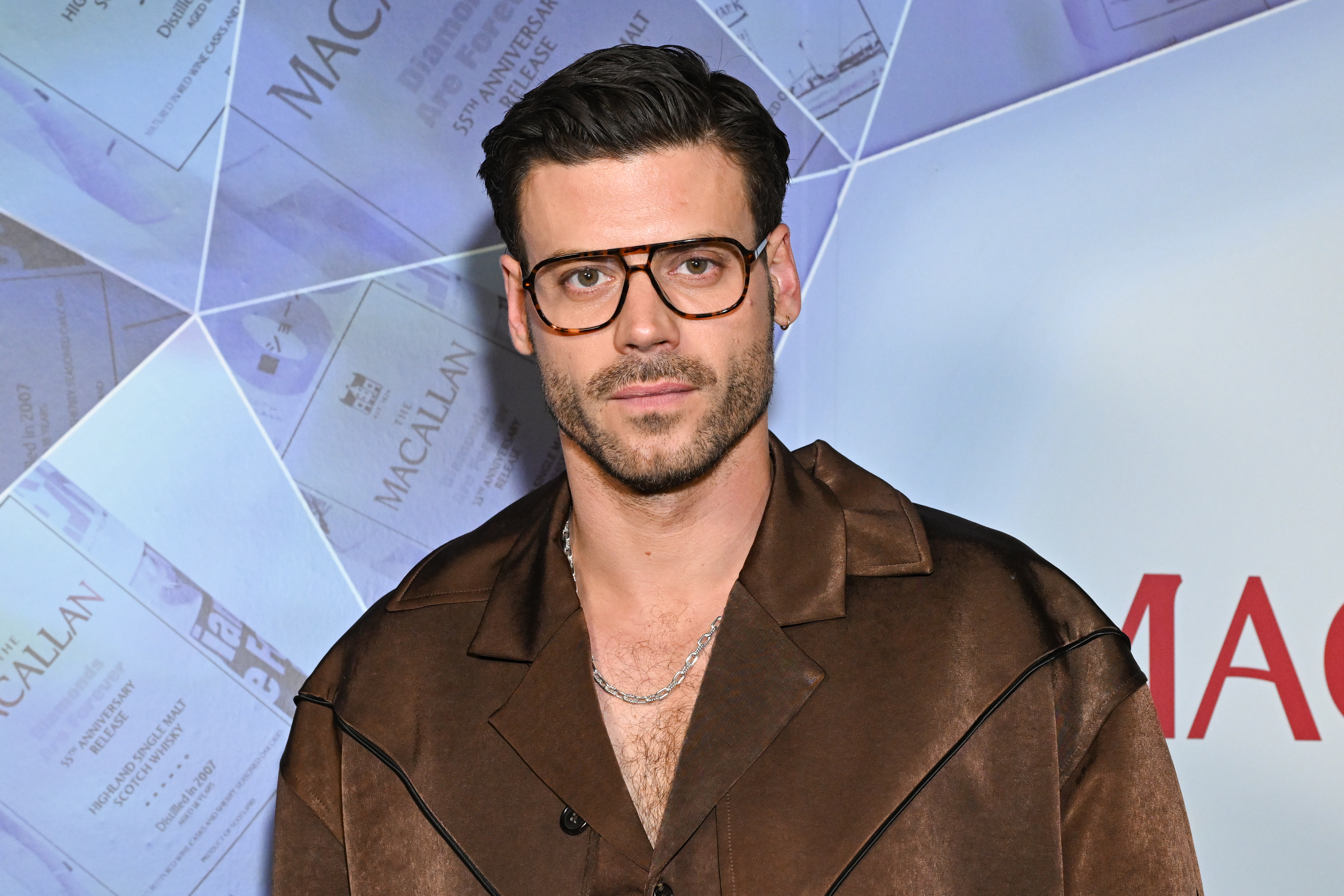
Men can have same-sex friends, and celebrities don’t owe you any clarification on their personal lives. Such is true for Heated Rivalry stars François Arnaud and Connor Storrie, who play Scott Hunter and Ilya Rozanov in the smash queer hockey romance.

The two have been seen hanging out quite often, from various parties and events to more private affairs. Now, I am no stranger to a little bit of wouldn’t it be funny if they were dating thought process. I grew up online, after all. Though Storrie has been close-lipped about his sexuality, Arnaud is openly bisexual, so it isn’t quite as far-fetched as, say, putting two straight married people in the same situation.

Thursday, February 5th, 2026 07:30 pm

Posted by Jenna Anderson

man standing on a stage

Glee‘s legacy continues to live on in ways that no one could have even imagined. If you watched Fox’s musical dramedy for long enough, something from it probably sticks with you to this day: a particular cover that you’ll argue is better than the original song, or a goofy one-liner delivered from one of the show’s ensemble cast members.

The latest way that Glee has stuck with me has been through a new TikTok rabbit hole, centered around one of the show’s stars, Matthew Morrison. Morrison, who played teacher Will Schuester on the show, is currently embarking on his “Rhythms and Revelations” concert series. Described on his official website as “a car wash for your soul,” videos of the show have made their way to my FYP… and they’ve been something to behold.

Thursday, February 5th, 2026 07:00 pm

Posted by Rachel Thomas

woman shares strange shopping day (l) woman goes to try on engagement rings (r)

A Houston woman went to multiple jewelry stores, like Kay’s and Jareds to try on engagement rings. The best part? She’s single. 

It started when Qui2success (@qui2success) posted a TikTok to her page explaining that she has “faith of a mustard seed.” That is, she believes in the power of having just a small bit of faith in finding a husband. By going to try on rings, she’s manifesting an early start to her future life. 

Thursday, February 5th, 2026 06:59 pm

Posted by Sanchari Ghosh

A pair of friends from Illinois had one of their wildest dreams come true this week after they won a whopping $350,000 jackpot after purchasing a lottery ticket.

It all happened when Randy was taking his wife to a doctor’s appointment, and they decided to stop at Jewel-Osco on the 170 Block of East Roosevelt Road in West Chicago to purchase a Quick Pick ticket. Randy and April, who are anything but amateurs in the field of lottery ticketing, had made a pact with each other that if they ever won the lottery, they would split the amount of money they got.

Thursday, February 5th, 2026 07:06 pm

Posted by Athena Scalzi

A good beside manner makes all the difference in your medical care. So how polite could a robot doctor or AI nurse be? Justin C. Key makes the argument that human connection in medicine is an absolute requirement, and empathy should be all the rage amongst hospital staff. He took this attitude into the creation of his newest novel, The Hospital at the End of the World. Grab you insurance card and come see how connection and community are some of the best medicines.

JUSTIN C. KEY:

It’s hard to keep your humanity in medical training.

It’s a potent thought considering the AI war brewing. We have a process of training doctors that desensitizes, burns-out, and enforces systemic biases. If we’re training people to be robots, why not let the actual robots do it better?

In crafting this book, I set out to make a case for the opposite.

I’m a science fiction author who happened to go to medical school for the same reason I’m drawn to writing: the belief in the inherent value of human connection. I learned early in my medical journey that our healthcare system makes it very difficult to uphold this value. Physicians are overworked, bogged down in red tape, swimming upstream against a for-profit insurance system, and have too many patients and not enough time.

Then there’s the training itself. I didn’t like medical school. I didn’t like the hierarchy. I didn’t like the glorification of battle scars. I didn’t like the environment that pushed my classmate to suicide just months before graduation. Though my alma mater did great work in teaching the art of medicine and the importance of being with your patient, the core culture remained.

It wasn’t until I’d gotten my degree, had some years of autonomous patient care under my belt, and had the chance to process my experiences through my writing that I realized how magical it is to become a healer. No, not in an elitist or ‘holier than thou’ way. But the privilege to build a partnership meant to enhance a human life and, in a lot of cases, save it.

My first novel follows young medical student Pok Morning. There’s the premise you’ll get on the jacket cover and in the pitches and in the interviews—AI vs medicine, who will prevail?!—but as the larger, existential battle rages on, Pok still has to navigate the brutal process of becoming a doctor. How could I strike the balance between my perceived experience and later reflections? I was also asking a deeper, more introspective question: how did I come out of training valuing human connection so much when the process could have very well stripped me of that? 

The importance for humanity in medicine isn’t a given. With delivery and mobile apps, we are more and more disconnected from the people with whom we exchange services. And one can’t deny that there are some tasks a cold, calculated machine might be suited for. Even then, usually the best result comes from a pairing with human intuition. I wouldn’t knowingly get on a plane that didn’t have both an experienced pilot and a functional autopilot computer system. Would you? 

And then there’s the risks of having a human in the driver’s seat. Computers can’t drink and drive. They can’t be distracted by texting. They can’t forget to check a burn victim’s throat for soot just because a cooler case rolled by in the ER (yes, I literally just rewatched THAT Grey’s Anatomy episode). 

And thus winning the war of AI vs medicine is less about showing the flaws of AI (and trust, there are many and if I were an AI I’d make up a fake statistic to prove that point) but rather in making the case for humanity’s value. The most rewarding part of medicine—certainly for me and I suspect a lot of my colleagues who still hold hope—is helping someone by tapping into our own human parts. Empathy. Perspective. Community. This power is separate from outcomes. The task is easiest (and possibly even in AI’s reach) when the treatment worked and the patient improved. But what about when things go wrong? What about delivering bad news? What about being with someone during the hardest part of their life? There’s value in being seen and heard by another human. if a generated likeness said and did everything right, I’d bet that, for the patient, the experience would be as rewarding as watching a robot win the Olympics (in any category).

And yet . . . our healthcare system leaves little space for quality time between physician and patient. Those seeking help are left feeling unheard, underprioritized, and scrambling for alternative solutions. I fear that AI is going to come in and fill in these gaps (ChatGPT therapist, anyone?). Which is a shame because technology is supposed to relieve a physician’s burden and create more time for deeper connection, not eliminate it altogether. That dichotomy fuels the background of this book. Pok learns the ‘hard way’ of doing medicine while discovering its value.

There’s a moment early on in Pok’s medical school career where he doesn’t do as well as he hoped and feels he’s the only one. That everyone else is doing fine while he struggles. It’s a horrible place to be. I know because I’ve been there. But as the author of Pok’s world, I was able to imagine what it would look like to be lifted up from that, to have such disappointment strengthen community, resolve, and humility. The same way no one gets through illness alone, no one becomes a physician in isolation. The experiences that shape do so through the social lens.

Connection begets connection and that’s why it’s essential that medical education doesn’t exist in a bubble. There’s various levels of socialization, from peer to peer (Pok and his classmates), mentee to mentor (Pok and his professors) and, at some point, mentor to mentee (the student becomes the teacher). Like much of life, these interactions can go well or they can be stressful. They can build up or tear down. The types of community one experiences while becoming a physician can very much inform what they will recreate with their own patients. 

The type of medicine I created in The Hospital at the End of the World reflects what I strive to achieve as a physician. How did I put it on the page? By combining the essentials from my own experiences with what I hope will change for future generations of student doctors.  Pok, and hopefully my readers, are better for it.


The Hospital at the End of the World: Amazon|Barnes & Noble|Bookshop|The Rep Club

Author socials: Website|Instagram|TikTok

Thursday, February 5th, 2026 01:49 pm
Saturday's Hero (1951) was already failing to survive contact with the Production Code when the Red Scare stepped in. To give the censors their back-handed due, the results can be mistaken for an ambitiously scabrous exposé of the commercialization of college football whose diffusion into platitudes beyond its immediate social message may be understood as the inevitable Hollywood guardrail against taking its cynicism too thoughtfully to heart. It just happens that any comparison with its source material reveals its intermittently focused anger as a more than routine casualty of that white picket filter: it is an object lesson in the futility of trying to compromise with a moral panic.

Optioned by Columbia before it was even published, Millard Lampell's The Hero (1949) was a mythbuster of a debut novel from an author whose anti-capitalist, anti-fascist, pro-union bona fides went back to his undergraduate days and whose activism had already been artistically front and center in his protest songs for the Almanac Singers and his ballad opera with Earl Robinson. The material was personal, recognizably developed from the combined radicalization of his high school stardom in the silk city of Paterson and his short-lived varsity career at West Virginia University. Structurally, it's as neat and sharp as one of his anti-war lyrics or labor anthems, sighting on the eternally shifting goalposts of the American dream through the sacred pigskin of its gridiron game. Like a campus novel pulled inside out, it does not chronicle the acclaim and acceptance found by a sensitive, impressionable recruit once he's played the game like a Jackson man for his alma mater's honor and the pure love of football, it leaves him out in the cold with a shattered shoulder and ideals, assimilating the hard, crude fact that all the brotherly valorization of this most patriotic, democratic sport was a gimmick to get him to beat his brains out for the prestige and profit of silver-spooned WASPs who would always look down on him as "a Polack from a mill town" even as he advertised the product of their school in the hallowed jersey of their last doomed youth of an All-American. Beneath its heady veneer of laurels and fustian, football itself comes across as a grisly, consuming ritual—Lampell may not have known about CTE, but the novel's most significant games are marked by dirty plays and their gladiatorial weight in stretchers. It goes without saying that team spirit outweighs such selfish considerations as permanent disability. The more jaded or desperate players just try to get out with their payoffs intact. "I was only doing a job out there. I got a wife and kid, I was in the Marines three years. I needed the dough, the one-fifty they offered for getting you out of there." None of these costs and abuses had escaped earlier critiques of amateur athletics, but Lampell explicitly politicized them, anchoring his thesis to the title that can be read satirically, seriously, sadder and more wisely, the secret lesson that marginalized rubes like Steve Novak are never supposed to learn:

"Of all the nations on earth, it seems to me that America is peculiarly a country fed on myths. Work and Win. You Too Can Be President. Bootblack to Banker. The Spirit of the Old School. We've developed a whole culture designed to send young men chasing after a thousand glistening and empty goals. You too, Novak. You believe the legend . . . You've distilled him out of a thousand movies and magazine stories, second-rate novels and photographs in the advertisements. The Hero. The tall, lean, manly, modest, clean-cut, middle-class, Anglo-Saxon All-American Boy, athletic and confident in his perfectly cut tweeds, with his passport from Yale or Princeton or Jackson . . . To be accepted and secure; to be free of the humiliations of adolescence, the embarrassment of being Polish or poor, or Italian, or Jewish, or the son of a weary, bewildered father, a mother who is nervous and shouts, a grandfather who came over from the old country . . . You have to learn to recognize the myth, Novak. You have to learn what is the illusion, and what is the reality. That is when you will cease being hurt, baffled, disillusioned by a place like this. You won't learn it from me. You won't learn it from a lecture, or a conversation over teacups. But you'll have to learn."

Almost none of this mercilessly articulated disenchantment can be found in the finished film. Co-adapted by Lampell with writer-producer Sidney Buchman and chronically criticized by the PCA, Saturday's Hero sticks with melodramatic fidelity to the letter of the novel's action while its spirit is diverted from a devastating indictment of the American bill of goods to the smaller venalities of corruption in sports, the predatory scouts, the parasitic agents, the indifferent greed of presciently corporatized institutions and the self-serving back-slapping of alumni who parade their sacrificially anointed mascots to further their own political goals. It's acrid as far as it goes, but it loses so much of the novel's prickle as well as its bite. Onscreen, old-moneyed, ivy-bricked, athletically unscrupulous Jackson is a Southern university, mostly, it seems, to heighten the culture shock with the Northeastern conurbation that spawned Steve's White Falls. In the novel, its geography is razor-relevant—it decides his choice of college. Academically and financially, he has better offers for his grades and his talent, but its Virginian mystique, aristocratically redolent of Thomas Jefferson and Jeb Stuart, feels so much more authentically American than the immigrant industry of his hardscrabble New Jersey that he clutches for it like a fool's gold ring. The 2026 reader may feel their hackles raise even more than the reader of 1949. The viewer of 1951 would have had to read in the interrogation of what makes a real American for themselves. The question was a sealed record in the McCarthy era; it was un-American even to ask. It was downright Communist to wonder whether what made a real hero was a gentleman's handshake or the guts to hold on like Steve's Poppa with his accent as thick as chleb żytni, who went to jail with a broken head in the 1913 silk strike and never crossed a picket line in his life. For Lampell, the exploitativeness of football could not be separated from the equally stacked decks of race and economics that drove students to seek out their own commodification. "It is a profound social comment that there are so many Polish, Italian, Jewish and Negro athletes. Because athletics offers one of the few ways out of the tenements and the company houses." The Production Code was a past master of compartmentalization, married couples placed decorously in separate beds. The football scenes in Saturday's Hero are shot with bone-crunching adrenaline by God-tier DP Lee Garmes as if he'd tacked an Arriflex to the running back and and if the picture had been ideologically that head-on, it might have lived up to the accusations of subversive propaganda which the presence of class consciousness seemed to panic out of the censors. It feels instead so circumscribed in its outrage that it is faintly amazing that it manages the novel's anti-establishment, not anti-intellectual ending in which Steve, proto-New Wave, walks away from the gilded snare of Jackson determined to complete his education on his own terms even if it means putting himself through night school in White Falls or New York. As his Pacific veteran of a brother gently recognizes, in a way that has nothing to do with diplomas, "My little brother is an educated man." It's a hard-won, self-made optimism, surely as all-American as any forward pass. With the vitriolic encouragement of such right-wing organizations and publications as The American Legion Magazine (1919–), its even more expressly anti-Communist spinoff The Firing Line (1952–55), and the anti-union astroturf of the Wage Earners Committee, the movie after all its memos, rewrites, and cuts was picketed and charges of card-carrying Communism levied against writer Lampell, producer Buchman, and supporting player Alexander Knox.

Why pick on him? The blacklist had already won that round. For his prolifically left-wing contributions to the Committee for the First Amendment, Progressive Citizens of America, the Actors' Lab, the Screen Actors Guild, and the American Russian Institute, Knox had been named in Myron C. Fagan's Documentations of the Reds and Fellow-Travelers in Hollywood and TV (1950). By the end of that year, he had taken his Canadian passport and his family to the UK and returned to the U.S. only for the production dates required to burn off the remainder of his contract with Columbia. Since witch-hunts have by definition little to do with facts and everything to do with fear, the picketers didn't have to care so long as they could seize on his Red-bait reputation—The Firing Line would cherish a hate-on for him as late as 1954—but it remains absurdly true that at the time when Saturday's Hero premiered, he was living in London. His name had been insinuated before HUAC as far back as the original hearings in 1947. Harry Cohn might as well have rolled his own with those memos and let Knox give that broadside denunciation of the great American myth.

Fortunately, even a truncated version of Professor Megroth of the English Department of Jackson University is an ornament to his picture, no matter how irritably he would wave it off. Plotwise, the character is strictly from cliché, the only adult on campus to bother with an athlete's mind instead of his rushing average and return yards, but Knox makes him believable and even difficult, the kind of burnt-out instructor who makes sour little asides about the tedium of his own courses and plays his disdain for sportsball to the cheap seats of his tonier students as a prelude to putting the blue-collar naïf he resents having been assigned to advise on the spot. Can I find a hint that Knox ever played Andrew Crocker-Harris in his post-war stage career? Can I hell and I'd like to see the manager about it. Like the subtly stratified fraternity houses and dorms, he looks like just another manifestation of the university's double standards until Steve goes for the Romantic broke of quoting all forty-two Spenserian stanzas of "The Eve of St. Agnes" and the professor is ironically too good a sport not to concede the backfire with unimpeachable pedantry. "You don't understand, Novak. You're supposed to stand there like a dumb ox while I make a fool out of you." His mentorship of Steve is mordant, impatient, a little shy of his own enthusiasm, as if he's been recalled to his responsibilities as a teacher by the novelty of a pupil who goes straight off the syllabus of English 1 into Whitman and Balzac and Dostoyevsky as fast as Megroth can pull their titles off the shelves, making time outside his office hours—in a rare note of realism for Hollywood academia, he can be seen grading papers through lunch—in unemphasized alternative to the relentless demands of the team and especially its publicity machine that eat ever further into its star player's studies and, more fragilely, his sense of self. "You know, if you continue in this rather curious manner, I may be forced to give you quite a decent mark. Be a terrible blow to me, wouldn't it?" That it doesn't work is no criticism of Megroth, who is obviously a more than competent advisor once he gets his head out of his own classism. As he would not be permitted to point out on film, it is hideously difficult to deprogram a national freight of false idols, especially after eighteen years of absorbing them as unconsciously as the chemical waste of the dye shops or the ash and asbestos fallout of the silk mills. He can talk about truth, he can talk about self-knowledge; he can watch horrified and impotent from the stands of a brutal debacle as it breaks his student across its bottom line. He would have played beautifully the quiet, clear-eyed conversation that the PCA rejected as "anti-American." Barely a line remains, cut to shreds, perhaps reshot: "The dream, the dream to be accepted and secure . . . Once you know it's a dream, it can't hurt." Professor Megroth says it like the only thing he has left to teach a bitterly disillusioned Steve, whom even a joke about industrial insurance can't persuade to stay a second longer at Jackson than it takes him to pack. Alex Knox would revisit the U.S. only once more in 1980, thirty years after it had chased him out. When he began to be offered parts in American pictures again, he would take them only if they were internationally shot.

"One way that fascism comes," Millard Lampell wrote as a senior at WVU in 1940, "is by an almost imperceptible system of limitations on public liberty, an accumulation of suppressions. The attack on civil liberties is one invasion the United States army can't stop. The only safeguard of democracy at the polls is the determination of the people to make it work." Boy, would he have had a lousy 2024. He didn't have such a good 1950, when he was named in the notorious Red Channels: The Report of Communist Influence in Radio and Television and in short order vanished from American screens until the 1960's. Sidney Buchman followed much the same trajectory, starting with his refusal to name names before HUAC the same month that Saturday's Hero opened. Since he was encouraged to write one of those confessional letters clearing himself of all Communist sympathies, I am pleased to report that Alexander Knox completely blew it by digressing to castigate the House Un-American Activities Committee for exactly the kind of lawless groupthink it claimed to have formed to root out, which he was unsurprisingly right damaged far more of America's image on the world stage than a couple of socially progressive pictures. Is there an echo in here? The blacklist passed over the majority of the remaining cast and crew—veteran direction by David Miller, a journeyman score by Elmer Bernstein, and effective to exact performances from John Derek, Donna Reed, Sidney Blackmer, Sandro Giglio, Aldo Ray, and no relation Mickey Knox—but even the topical boost of a series of college athletics scandals couldn't save the film at the box office. It was Red and dead.

"Athletics! No interest whatsoever in football, basketball, tennis, beanbag, darts, or spin-the-bottle." I have about as much feeling for most sports as Professor Megroth, but I learned the rules of American football because my grandfather always watched it, always rooting for the Sooners long after he had retired from the faculty of the University of Oklahoma. I would have loved to ask him about this movie, the sport, the politics; I would have loved to catch it on TCM, for that matter, but instead I had to make do with very blurrily TCM-ripped YouTube. The novel itself took an interlibrary loan to get hold of, never having been reprinted since its abridged and pulp-styled paperback from the Popular Library in 1950. It's such a snapshot, except the more I discovered about it, the more I wondered where the rest of the twentieth century and most of the twenty-first had gone. "I console myself," the novel's professor says, unconsoled, as he shakes hands for the last time with Steve, "with the thought that even if I had said all this, you would not have believed me. You would have had to find out." And then, just once, could we remember? This education brought to you by my curious backers at Patreon.
Tags:
Thursday, February 5th, 2026 05:55 pm

Posted by Sarah Fimm

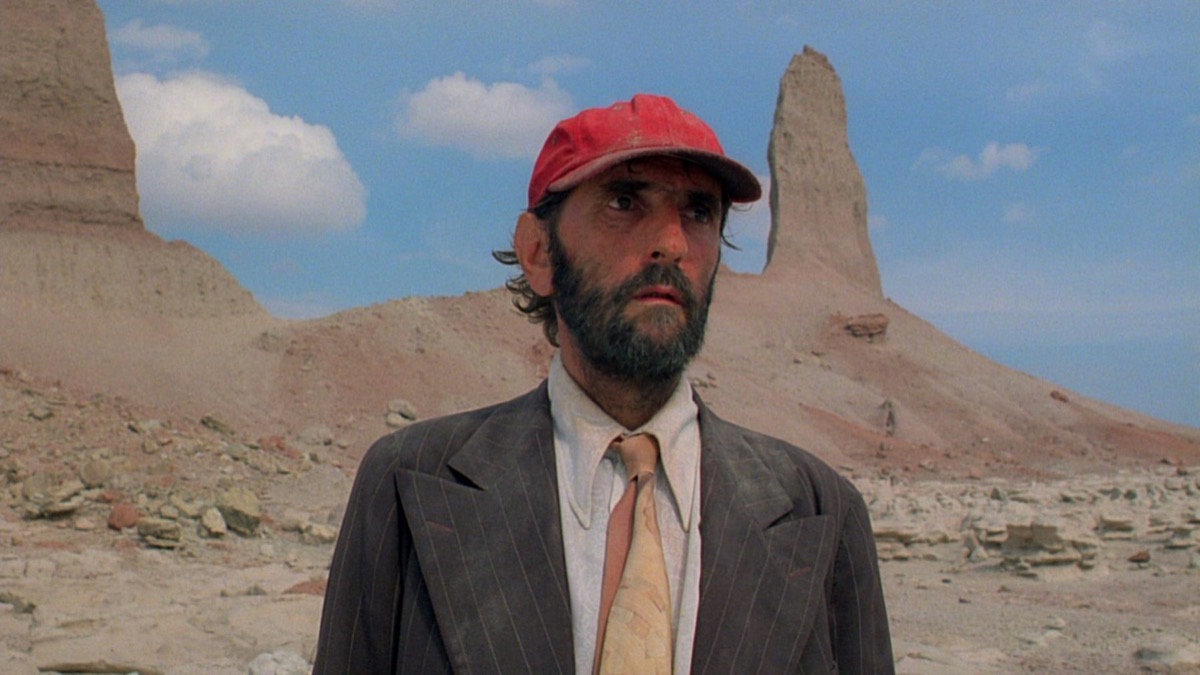
A man stands lonely in the desert wasteland in "Paris, Texas"

Six shooters? Ten-gallon hats? Three hundred miles to the next town on horseback? When you’re making a neo-Western, these genre staples become mere genre suggestions! The neo-Western doesn’t need revolvers and outlaws to serve up a slice of American cinema; we’ve evolved since the days of the Old West. If there’s anything that the neo-Western proves, it’s that you don’t need riding chaps to have a cowboy’s soul. All you need is a love for open country, big skies, and possible criminal activity. There ain’t no big iron-packin’ Sheriff in town anymore, but plenty of folks are still trying to escape the reach of the long arm of the law. Thankfully, there’s still plenty of room to run this side of the Mississippi—these are the 10 best neo-Westerns of all time.

Paris, Texas

A man stands lonely in the desert wasteland in "Paris, Texas"
(Argos Films)

Directed by Wim Wenders, Paris, Texas is the story of a solitary man on one hell of a walk. After years of wandering the Western backcountry with nothing but a gallon jug of water for company, Travis Henderson is recovered by his well-off brother after passing out at a gas station. Taken to Los Angeles, Travis is reunited with his young son Hunter, whom he walked out on nearly half a decade before. Why? No one’s really sure, not even Travis himself. A film about unburying the past, Paris, Texas proves that the human heart contains more multitudes than there are sand grains in the Mojave Desert. Travis isn’t a bad man. He’s complicated, overwhelmed, sensitive, and completely unsuited for the rigors of suburban life—like any cowboy would be.

Thursday, February 5th, 2026 12:23 pm
ICE

Without immigrants, our cities would grind to a halt
It’s impossible to imagine the Twin Cities — or any major U.S. city — prospering without the contributions of immigrants.
by Bill Lindeke
https://www.minnpost.com/cityscape/2026/02/without-immigrants-our-cities-would-grind-to-a-halt/

County attorneys nix proposal for Minnesota sheriffs to coordinate with ICE
The Minnesota Sheriffs’ Association sought a way around Minnesota law that prohibits holding inmates past their release date for ICE.
by Ana Radelat
https://www.minnpost.com/national/washington/2026/02/county-attorneys-nix-proposal-for-minnesota-sheriffs-to-coordinate-with-ice/

Trump’s border-czar takeover does little to calm Minneapolis tensions: ‘The agenda is still the same’
Experts say Tom Homan’s charge, replacing Greg Bovino’s aggressive tactics, may change the tone, but not the mission
Shrai Popat in Minneapolis
https://www.theguardian.com/us-news/2026/feb/05/tom-homan-minnesota-gregory-bovino

ICE agents in Oregon cannot arrest people without warrants, judge rules
US federal judge issued a preliminary injunction barring warrantless arrests unless there is a likelihood of escape
Associated Press
https://www.theguardian.com/us-news/2026/feb/05/ice-immigration-raids-oregon Read more... )
Thursday, February 5th, 2026 06:00 pm
I had a birthday! It was low key (Mum is still not up for even small adventures) but involved a lot of eating. I had lunch with Dad, and then dinner with S before choir although I was still so full I managed half a starter and a bit of her dessert. Then choir, and we had some cookies in the break. Tomorrow I have post-swimming coffee and cake before work and then office snacks (three flavours of interesting cheese crackers! I thought that was more fun than cake).

Nearly everyone gave me vouchers as per my request and I have so many Steam vouchers now. That will be fun for when my wishlist items go on good sales! Also my dad gave me a scented candle but that was more of a "please get rid of this thing I don't want" than a present as such :D It appears to be a branded corporate gift from his old work, but it smells OK and my candle order has been "on its way" from the parcel facility less than twenty miles away for ten days now, so I'll take it.

Choir was also interesting because it was the first rehearsal of the second conductor candidate we're auditioning. So far I like him - probably better than the first one, although he was OK - but we'll see how it goes. I had demanded that S make sure I was sung happy birthday (before we realised it was the new guy's first night!) but she managed to make it happen anyway. Deeply mortifying in the moment, but also I really wanted it to happen! It was the 22nd anniversary of S and I joining the chorus (no prizes for guessing why I can remember exactly what date it was...) and we've been friends ever since.
Thursday, February 5th, 2026 05:00 pm

Posted by Rachel Thomas

woman gives opinion on ice agents (l) Ice agent (r)

A woman has a hot take regarding ICE agents: “ If a man is capable of being successful and making money, and has done things in his life to earn respect and power from the people around him, you’re not gonna find him anywhere near an ICE application,” said TikToker Bishop Barbie (@bishop.barbie). “Because that’s a loser.”

According to her, successful men are busy taking care of the people in their lives. Not joining Immigration and Customs or the Department of Homeland Security. Commenters agreed, saying that ICE agents were not the “best and brightest,” and that being an ICE agent is a huge red flag due to its lack of requirements. In general, women view ICE agents as the “bottom of the barrel” and valueless. 

Thursday, February 5th, 2026 05:06 pm

We're bringing sexy back: it's week six of Be A Goldfish: A Multifandom Multimedia Microbang! Last week, we got back to fannish basics with tropes, tropes, tropes, from cliches to variations on the classics to brand-new interpretations! This week, we're getting down with the ladies:

WEEK SIX: Girls, Girls, Girls Who run the world? Create a work centering on a female character. We wholeheartedly welcome transgender, intersex, and nonbinary women alongside their cisgender sisters.

Feel free to brainstorm, discuss, make friends, or let us know what you're cooking up in the comments here or on tumblr. We're excited to see what you create. Stay curious!

Check out our Prompt Doc for the entire list of this round's prompts. Refer to our Welcome Sticky or FAQ for posting guidelines.

Don't miss out: be sure to check out mod Vinny's January roundup, as well as our list of all the coolest concurrent February events to keep you inspired and creating!
Tags:
Thursday, February 5th, 2026 03:54 pm

Posted by Jonathan Wright

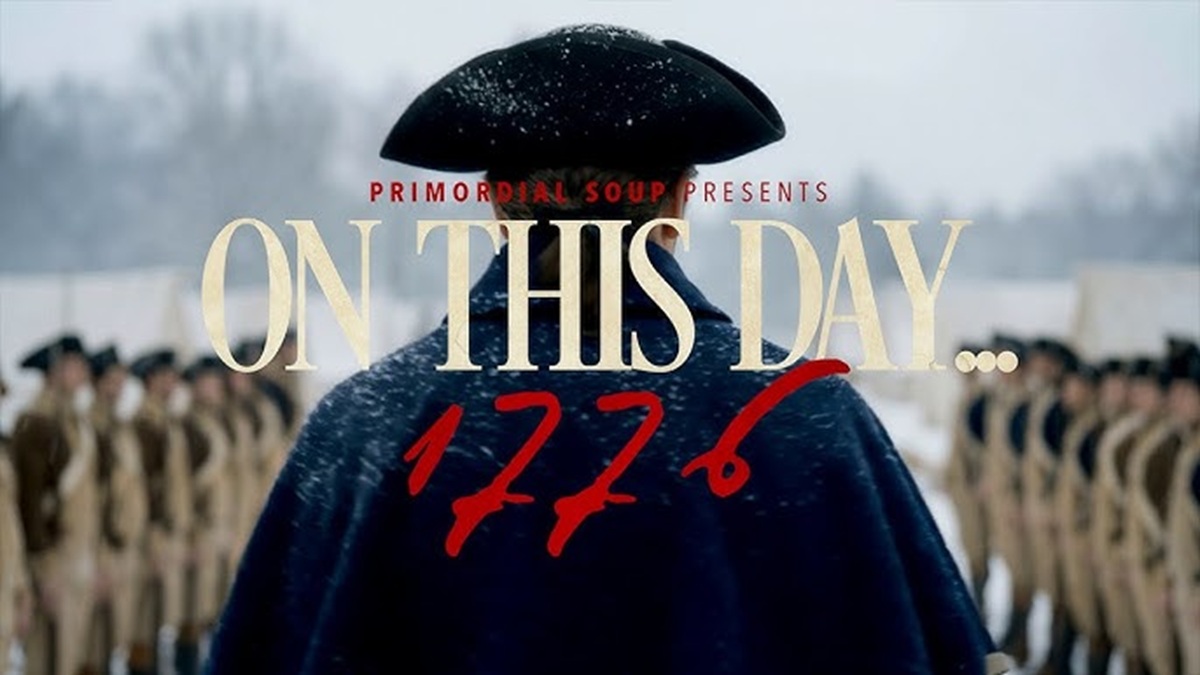
On This Day... 1776 by Darren Aronofsky

If you needed more convincing that Darren Aronofsky is only in the movie business to make people uncomfortable, then buckle up, because his next spectacle once again pushes the envelope in a way nobody asked for: A web series about the Revolutionary War, produced with AI.

Aronofsky’s AI production company Primordial Soup (yes, that’s the real name, and yes, it’s exactly as pretentious as it sounds) has unleashed On This Day… 1776 upon an unsuspecting world. The short-form series, created in partnership with Google DeepMind and distributed through Time Magazine’s YouTube channel, promises to recreate pivotal moments from America’s founding year using the magic of, uh, artificial intelligence. 

Thursday, February 5th, 2026 04:58 pm

Today I am thankful for...

  • Finally getting a phone call made, and finding that (as usual) it wasn't as bad as I thought it would be. NO thanks to my phone phobia -- should have done it a month ago.
  • The Harwich - Hoek van Holland ferry. Would be more thankful if the night run afforded more time to actually sleep.
  • Ordering stuff online.
  • A nice warm fuzzy blanket to wrap myself in. NO thanks for a body that feels cold in the evening no matter what the air temperature is. ALSO no thanks for deliveries that make me get out of my nice warm fuzzy blanket to answer the door.
  • Good Drugs.
  • Filk cons I can get to by public transit.

Tags:
Thursday, February 5th, 2026 03:41 pm

Posted by Teresia Gray

LONDON, ENGLAND - MARCH 29: J.K. Rowling arrives at the "Fantastic Beasts: The Secret of Dumbledore" world premiere at The Royal Festival Hall on March 29, 2022 in London, England. (Photo by Stuart C. Wilson/Getty Images)

JK Rowling is scurrying after her name popped up multiple times in The Epstein Files. The US Department of Justice released another batch of the highly anticipated documents related to the sex trafficker.

All over social media the Epstein Files are trending, and the Harry Potter author finds herself at the center of some of these conversations. Epstein argued that he was invited to an event for Harry Potter and the Cursed Child on Broadway. When he was turned away at the door in April of 2018, the party organizers made sure to not let him in. Rowling quickly hopped on X to deny the allegations from fans who have noted her championing other causes to “protect children,” but notice that the most famous pedophile in history somehow thought he had an invite to her event.

Thursday, February 5th, 2026 03:00 pm

Posted by Ljeonida Mulabazi

plane full of families (l) american airlines aircraft (r)

The U.S. has been experiencing extreme winter weather, with icy conditions recently spreading even across southern states.

While Chicago is no stranger to harsh, cold winters, some passengers are reporting unusual disruptions to air travel. Recently, one TikTok creator filmed what that looked like from inside the plane. 

Thursday, February 5th, 2026 02:59 pm

Books on pre-order:

  1. Platform Decay (Murderbot 8) by Martha Wells (5 May)
  2. Radiant Star (Imperial Radch) by Ann Leckie (12 May)
  3. Unrivaled (Game Changers 7) by Rachel Reid (29 Sep)

Books acquired in January:

  • and read:
    1. The Shots You Take by Rachel Reid
  • and previously read:
    1. Time to Shine by Rachel Reid

Books acquired previously and read in January:

  1. Claiming the Tower (Council Mysteries 1) by Celia Lake [Dec 2025]
  2. Alchemical Reactions by Celia Lake [Dec 2025]

Borrowed books read in January:

  1. The Serpent's Shadow (Kane Chronicles 3) by Rick Riordan [3]
  2. Demigods & Magicians by Rick Riordan [3]
  3. The Sword of Summer (Magnus Chase 1) by Rick Riordan [3]
  4. The Hammer of Thor (Magnus Chase 2) by Rick Riordan [3]
  5. The Ship of the Dead (Magnus Chase 3) by Rick Riordan [3]
  6. 9 from the Nine Worlds by Rick Riordan [3]
  7. The Let Them Theory by Mel Robbins

[1] Pre-order
[2] Audiobook
[3] Physical book
[4] Crowdfunding
[5] Goodbye read
[6] Cambridgeshire Reads/Listens
[7] FaRoFeb / FaRoCation / Bookmas / HRBC
[8] Prime Reading / Kindle Unlimited

Thursday, February 5th, 2026 01:42 pm
Three books I've read recently. First is A Drop of Corruption, the sequel to The Tainted Cup, which I really liked. I also really enjoyed A Drop of Corruption; like the previous book it's a great page-turner with a twisty mystery plot, with a well-drawn world and some interesting themes (particularly around governance and social institutions). Recommended, but read The Tainted Cup first. Eligible for the 2026 Hugos, I think.

Second, I've had A Half-Built Garden on my Kobo for a while, and finally got round to reading it. It's a near-future first contact novel, although for the aliens its not their first contact. There's a lot here about how we treat our environment and govern ourselves, as well as how we've used sci-fi to imagine alternative futures. I thought this book rewarded having long periods of time to approach it in; it needs thoughtful reading.

Finally, Nordic Visions, subtitled "The best of Nordic speculative fiction", edited by Margrét Helgadóttir. A selection of short stories from (in order) Sweden, Denmark, The Faroe Islands, Iceland, Norway, and Finland. These stories are mostly from the horror/fantasy part of speculative fiction, and some of the horror is pretty dark. As with any such selection, it's a bit of a mixed bag, but there are some very strong stories in here; I think the opening She was particularly effective, and I enjoyed the Kalevala story The Wings that Slice the Sky.